Blog · Heitersheim · Wine
The wine story of Heitersheim
Two Thousand Years in a Glass
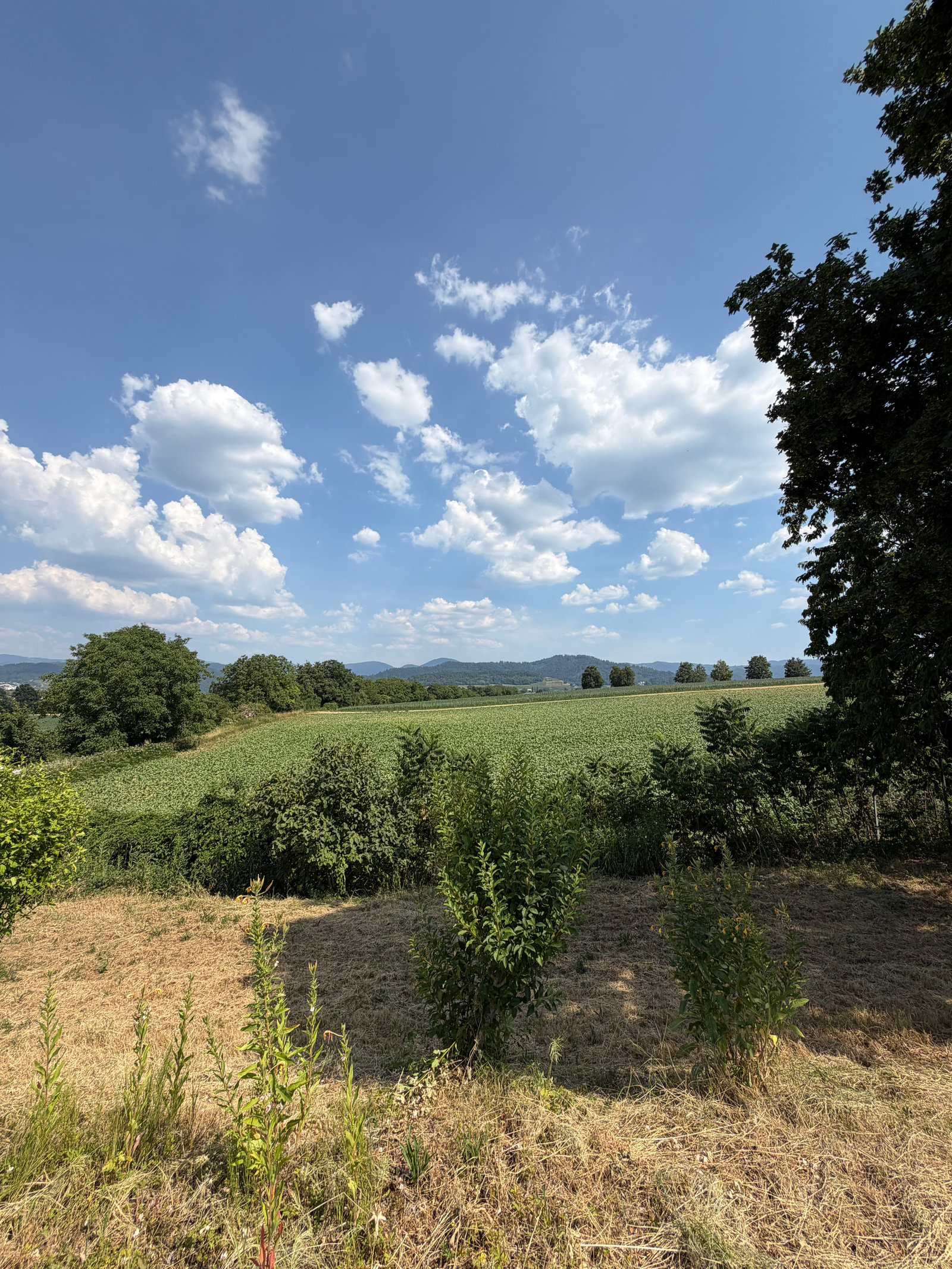
Heitersheim is my family’s town. My father was born here, and our family has been here for generations. I go back regularly, and I just returned from my latest visit. I sat down with the winemakers behind the three family estates in this story and tasted their wines with them: Julian Zotz, Fabian Zähringer, and Katharina and Leonie at Schneider-Pfefferle. My daughter, Arrington, tasted right alongside me. But first, here is the story of my family’s town and its two thousand years of wine.
It Starts with the Romans
Heitersheim's wine story starts nearly two thousand years ago, with the vineyards of a Roman country estate.
Romans were settling here by around 30 AD. In the 70s AD, under Emperor Vespasian, the land east of the Upper Rhine was firmly brought into the Empire. The Celtic people already living there gradually took on Roman ways, and settlers came in from Gaul and Italy. Soldiers, officials, merchants and retired veterans followed. Many veterans used their discharge pay to buy country estates on the hills near their old garrisons, with views over the Rhine valley and a climate good for farming and health.
Heitersheim has the most impressive reminder of that era. On the eastern edge of town, next to the old castle, archaeologists uncovered a villa urbana, a grand country house built for the Roman elite. It stood on the road to Sulzburg, where the Romans mined silver and lead. Coins and pottery show that it was begun around 30 AD as a simple timber-frame house. Over the next two centuries it was rebuilt in stone and enlarged several times. Around the middle of the 3rd century AD it was destroyed by fire. Today it is the only known Roman villa urbana east of the Rhine.
The scale is remarkable. The main house grew to about 1,500 square meters (about 16,000 square feet), and after a last expansion around 180 AD it reached about 3,000 (about 32,000 square feet). The whole estate, including its vineyards and fields, covered some 55,000 square meters (about 590,000 square feet, or 13.5 acres) and sat inside a wall. The house had two parts: a stately residence (the pars urbana) and a working farm (the pars rustica). In the atrium was a reflecting pool about 18 meters long, built on a Mediterranean model. The villa had running water and underfloor heating, called a hypocaust.
Today the free Villa Urbana museum lets you look down into the villa's cellar. You can see the staircase and the wall niches where vases and statues once stood, plus a reconstructed pool and fountain figure of Cupid riding a dolphin. Weingut Zotz, whose property borders the excavation, credits the Romans with bringing winemaking and their love of good living to the region. Rome's own wine politics show how much northern vineyards mattered. According to the historian Suetonius, Emperor Domitian (81–96 AD) banned new vines in Italy and ordered half the provincial vineyards cut down to protect Italian wine and grain. Historians doubt the order was ever widely enforced. Under Emperor Probus (276–282), the Gauls were officially allowed to grow vines and make wine. When you raise a glass here, you carry on a habit that goes back to Roman times.
Around 260 AD the Romans pulled back behind the Rhine and Alemannic settlers moved in. The wine stayed. Heitersheim first appears in writing in 777, in the records of the powerful Lorsch Abbey. A Lorsch register from the 9th century lists wine deliveries among the dues Heitersheim's farms owed the abbey, along with grain, eggs, pigs and sheep.
The region's earliest written wine records are a little older. They date from 715–721, when vineyards in the nearby villages of Pfaffenweiler and Ebringen were given to the Abbey of St. Gall. But Heitersheim's villa vineyards came centuries earlier, giving the town a strong claim to some of the oldest wine roots in the Markgräflerland. The town proudly calls itself "one of the oldest wine villages in the sunny Markgräflerland."
The Knights Arrive
The next big chapter came with a religious order of knights. In 1272, Gottfried von Staufen handed over his estate and church in Heitersheim to the Knights of St. John, known in German as the Johanniter. In 1428 the order moved the seat of its Grand Priory of Germany here. From here, the Grand Prior oversaw the order's lands from northern Italy to Sweden.
After the order received Malta in the 1520s, it became known as the Order of Malta (the Malteser). In 1548, Emperor Charles V made the Grand Prior an imperial prince, and Heitersheim became the center of its own small principality. A former manor became a grand moated castle, the Malteserschloss, built partly on top of the Roman villa. The knights grew wine and built a two-story wine cellar inside the castle. Their rule ended in 1806, when Napoleon's reorganization of Germany made Heitersheim part of the Grand Duchy of Baden. The town's coat of arms still shows the white eight-pointed Maltese cross, and its vineyards carry the site name "Maltesergarten" (the Maltese Garden).
Sun, Loess and Gutedel
Heitersheim sits in the southern Upper Rhine valley, right where the Breisgau meets the Markgräflerland, the gently rolling wine country that runs south toward Basel. To the west lies the flat Rhine plain, and to the east the hills climb toward the Black Forest. The town and its hills sit on fertile loess, a fine, wind-blown soil. It is one of the warmest and sunniest corners of Germany, with an average annual temperature of about 11°C (52°F).
The signature grape here is Gutedel, known to the rest of the world as Chasselas. Around 1780, Margrave Karl Friedrich had cuttings brought from Vevey on Lake Geneva. The grape was already known locally, but he is credited with planting it on a large scale. It became so closely tied to the region that a Gutedel wine is often simply called a "Markgräfler." Expect it light, fresh and gentle, a classic wine to drink with a meal. Pinot grapes (the Burgunder family: Pinot Blanc, Pinot Gris, Pinot Noir) also do very well in this mild climate.
A Town Full of Winemakers
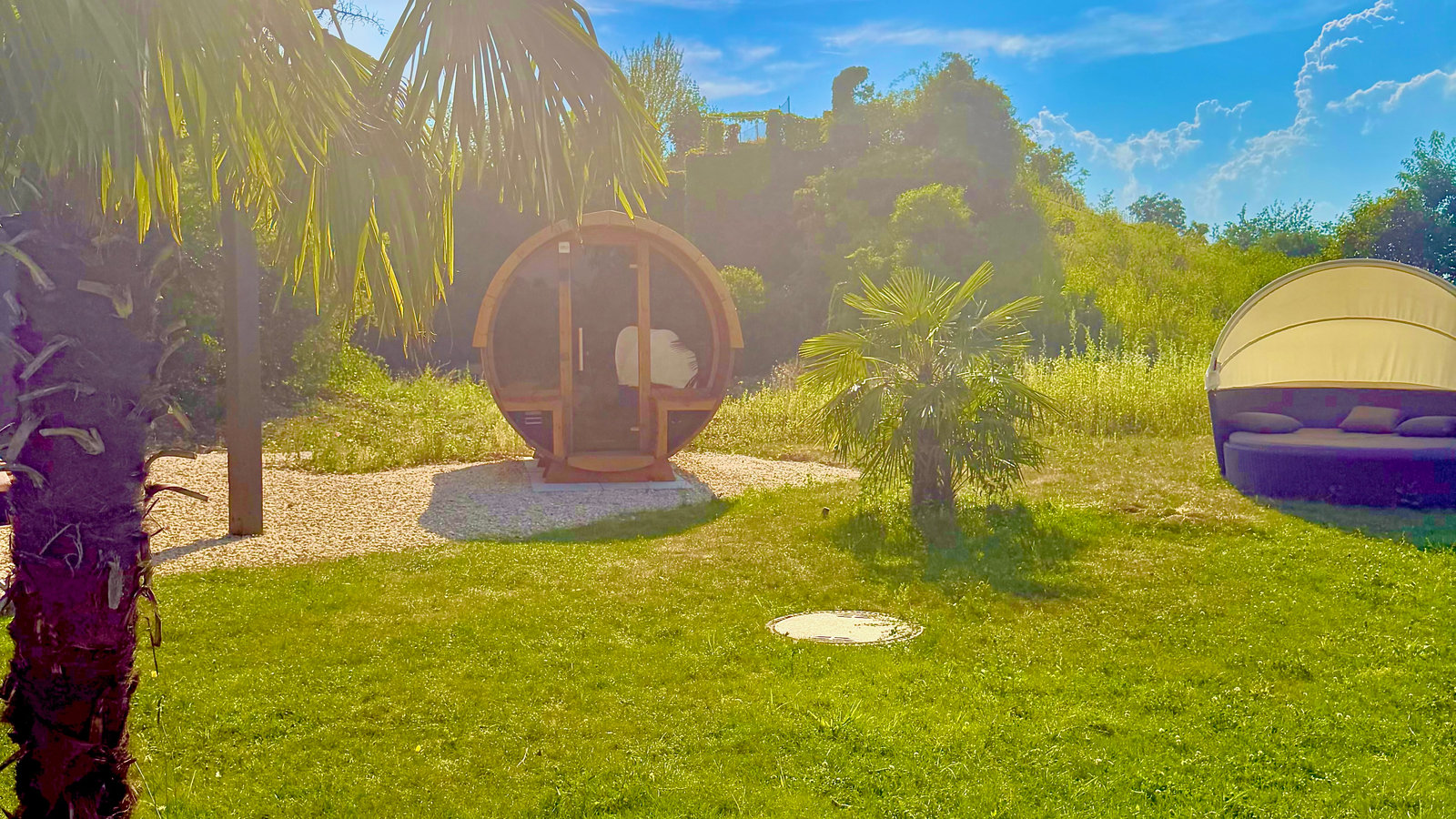
With more than 140 hectares (about 350 acres) of vines, Heitersheim is one of the larger wine towns in the Markgräflerland. The town lists ten family wineries plus the local winegrowers' cooperative (Winzergenossenschaft). Besides the three you'll meet below, there are Weingut Josef Walz, Weingut Marget, Weingut Feuerstein, Weingut Hippchen, Weingut Lampp, Privatweingut Schmidt and the Scholerhof. According to the town, the oldest of these estates has been in the same family for twelve generations. Look for a decorated broom hung on a farm gate: it means a Straußwirtschaft is open, serving the family's own wine with hearty local dishes. The scenic Wein-Panorama-Weg (wine panorama trail) winds through the Maltesergarten vineyards. From April to October, local estates take turns hosting Friday tastings called "Wein im Gut" (wine at the estate). In 2026 the Römerpark hosted the VINOVUM wine festival. That same year, Heitersheim was named one of the state's official "Weinsüden" wine villages.
Three Family Stories from a Town Full of Them
Here are three of those families. This October I visited all three and tasted through their wines with the winemakers, right where they are made.
Weingut Julius Zotz: in the knights' cellar
The Zotz story starts in the castle itself. In 1845 Karl Zotz took over the old double-story wine cellar in the Malteserschloss. Twenty years later, in 1865, his son Julius founded the winery there. The family lived and worked in the castle until around 1902, then rebuilt the winery right next door, where it still stands. In 1977 Martin Zotz made a bottle-fermented Gutedel Sekt (sparkling wine), considered the region's first grower's sparkling wine of its kind. Counting from Karl, the estate is now in its sixth generation. Julian Zotz and his cousin Michael run it today, backed by the experience of Julian's father, Martin. With roughly 95 hectares of vines, it is one of Germany's larger family wineries. Gutedel, in both white and red versions, is the house favorite.
Weingut Zähringer: organic pioneers since 1987
The Zähringer family's wine history in Heitersheim began on October 31, 1844. That day, tanner Michael Zähringer bought his sons a property with a wine cellar and a Trotte (a traditional wine press). In 1906 the winery moved to Johanniterstraße 61, where it still is. The turning point came in 1987, when Wolfgang Zähringer (fifth generation) and vineyard manager Paulin Köpfer began converting to organic winegrowing, an idea many experts then thought impossible. The estate later moved on to biodynamic farming and is certified by Demeter, a strict biodynamic standard. In 2013 its pioneering work earned it first place in Germany's federal award for organic farming. Today Fabian Zähringer, the sixth generation, runs the estate. Some wines are aged in large traditional oak casks and French barriques.
Weingut Schneider-Pfefferle: a farm that turned to wine
This is the youngest of our three stories. In 1984 Theresia and Paul Schneider opened "Schneider's Straußi" on their farm, which raised pigs and grew field crops. It was one of the Markgräflerland's first Straußwirtschaften, seasonal farm taverns where winemakers serve their own wine with simple local food. Their daughter Katharina studied winegrowing at Geisenheim, Germany's famous wine school. She shifted the farm toward wine, grew the vineyard area from 2.2 hectares to 7.5 and later about 10, and began bottling the estate's own wines. She runs it with her husband Mathias, an architect by training. Their daughter Leonie trained as a winemaker, studied enology at Geisenheim and now runs the cellar. The winery is a member of the organic association ECOVIN. Its cellar likes to experiment, with wines aged in concrete eggs and skin-fermented "orange" whites such as a Weissburgunder. From the courtyard you can look out over the southern Black Forest.
A Warmer Climate, More Red Wine
The Markgräflerland is best known for white wine, but red wine is gaining ground, partly because of a warmer climate. The State Wine Institute in Freiburg (Staatliches Weinbauinstitut) has tracked the change closely. Its temperature records for Freiburg go back to 1869 and show clear warming since the late 1980s. Its researchers found that Pinot Noir (Spätburgunder) grapes in the Markgräflerland began ripening around August 26 in the late 1970s. Thirty years later the trend pointed to August 6, almost three weeks earlier. Another study of the region's Pinot varieties since 1976 found that budbreak now comes about 13 days earlier, full bloom about 21 days earlier and the start of harvest about 15 days earlier. Riper grapes mean fuller-bodied reds, but also lower acidity, higher alcohol and more risk of late spring frost. The institute is responding by breeding new grape varieties that ripen later and resist fungal disease. In German these are called PIWIs, short for pilzwiderstandsfähig, meaning "fungus-resistant."
Our three spotlight wineries each show this in their own way:
- Zotz grows Spätburgunder alongside its beloved Gutedel. In recent years it has also planted more French varieties, including Cabernet Sauvignon, Merlot and Syrah.
- Zähringer makes a Spätburgunder Réserve from the Heitersheim Maltesergarten, fermented with wild yeasts in wooden casks and aged in small French oak barriques. It also makes a barrique-aged Cabernet Franc Réserve. In 2023 Fabian Zähringer told the wine blog Chez Matze that the wind now comes more and more from the north rather than the south. "We're not planning to move because of climate change," he said. "We just have to look more carefully at what we plant where, and how we make our vineyards, and our whole agriculture, more resilient." He added that the estate has been planting fungus-resistant PIWI grapes since the early 1990s. (His quotes are translated from German.)
- Schneider-Pfefferle now grows more Spätburgunder than any other grape, about a quarter of its vineyards and slightly more than its Gutedel. It also grows Merlot, Cabernet Sauvignon, Cabernet Mitos and Prior, a fungus-resistant red grape. It was early to plant varieties that were new to the area, such as Merlot, Cabernet and Sauvignon Blanc.
My Family’s Town
For me, this history is personal. My father was born in Heitersheim, and the parish books show Brendles here for almost four hundred years. The earliest I have found is Bernhard Brendle, who married Anna Hässler in Heitersheim on November 23, 1625, while the Thirty Years’ War raged across Germany. In the old books the name is often written “Brendlin.”
From Bernhard the line runs from father to son: Nicolas, born in 1635; Johannes, born in 1686; Franz, born in 1719, who lived his whole life under the Knights of Malta; Michael, who married in 1787; Jakob, baptized in 1797; and Josef, born in 1828. Josef’s son was Julius, my great-grandfather, born in Heitersheim on July 28, 1871. Counting from Bernhard, I am the eleventh generation, and my son is the twelfth.
The town’s records show the wider family at work, too. In the 1820s and 1830s, a Georg Brendle ran a mill on his own mill canal in Heitersheim and petitioned the authorities to release him from his water-rights fee.
Our family’s story is written on the wall of the Brendle house on Badhausstraße, on a town history plaque titled “Ehemaliges Lebensmittel- und Friseurgeschäft” (the former grocery and barbershop).
In 1886 my great-grandfather, Julius Brendle, still a teenager, opened a Kolonialwarengeschäft, a general grocery. It was the only shop of its kind in the upper part of town and supplied the neighbors with everything they needed day to day. Julius had four sons and a daughter. In 1925 one of his sons, Erwin, opened a barbershop in the same building. When Erwin emigrated to America in 1929, his brother took over the salon: master barber Franz Brendle, my grandfather and the first of four Franz Brendles.
In 1934 Franz married Elisabeth Lachenmaier from Bremgarten, my grandmother, and she kept the grocery going. In 1953, while the neighboring Gasthaus Malteserbad was closed, she even got a license to pour beer. Like many families here, the Brendles also farmed on the side. In the early 1960s the old farm buildings gave way to a new home and shop, and the salon passed to my uncle Adelbert and his wife Ingrid. Since 2001 it has been run by my cousin, Peter Brendle, the third generation in the chair. The grocery closed in 1986, exactly a hundred years after Julius opened it. Today the family house on Badhausstraße belongs to my cousin Susanne and her husband, Christof.
Erwin’s move to America turned out to shape my own story. Uncle Erwin finally settled in Hurley, New York, and ran a hair salon in nearby Kingston. He and his wife Mathilde, our Tante Nini, had no children. At one point he asked my grandfather to send one of his sons to take over the business. My father, Franz, was the one who went. Before he left, he had trained as a Kaufmann, a merchant, and our family believes he worked at the Zähringer winery, one of the three estates in this story. That is how our branch of the family came to New York, and how a third Franz Brendle ended up writing this from Goshen. A fourth, my son Franz Hudson Brendle, carries the name on. Tante Nini left her mark on our family, too: my first restaurant, Nina, was named for her, and my daughter, Arrington Nina, carries her name.
Whenever I walk past the Malteserschloss, through the old streets or along the Maltesergarten vineyards, I am walking where my family lived and worked long before me. I come back to Heitersheim often, and every visit feels like coming home. This fall was no exception: glass in hand, with Arrington beside me, I sat down with its winemakers.
Come Taste It
From a Roman estate to the knights' cellars to the many families working the same slopes today, Heitersheim's wine history is something you can taste. I’d love for you to join me on my Heitersheim trip to walk the wine trail, meet the winemakers and taste this history for yourself. Prost!
Summer Wine Trip · August 1–8, 2027
Taste it with me in Heitersheim
Wine country, the Staufen Weinfest, Freiburg and the Black Forest, with a small group of twenty.
See the tripSources
- Heitersheim (German Wikipedia): link
- Markgräfler Wein (German Wikipedia): link
- Weingut Julius Zotz (German Wikipedia): link
- Weingut Zotz, history: link
- Deutsches Weininstitut, Weingut Julius Zotz: link
- Weingut Zähringer, history: link
- Weingut Zähringer, organic winegrowing: link
- Oekolandbau.de, 2013 federal award: link
- Weingut Schneider-Pfefferle, about us: link
- Schwarzwald Tourismus, Weingut Schneider-Pfefferle: link
- Weingut Schneider-Pfefferle, wine guide (2025): link
- Badischer Weinbahnhof, Weingut Julius Zotz: link
- Staatliches Weinbauinstitut Freiburg, "In den Zeiten des Klimawandels" (2008): link
- BIO Web of Conferences, "Breeding of new disease-tolerant grape varieties – Viticulture in times of climatic change": link
- EWS Schönau, "Weinbau in Zeiten des Klimawandels": link
- Chez Matze, visit to Weingut Zähringer (2023): link
- Weingut Zähringer, Réserve wines: link
- Stadt Heitersheim, wineries: link
- Stadt Heitersheim, Straußwirtschaften: link
- Stadt Heitersheim, events calendar 2026: link
- Stadt Heitersheim, town portrait: link
- University of Freiburg, "Die Burgen im mittelalterlichen Breisgau": Heitersheim: link
- Die Markgrafschaft (1949), early wine records of the Markgräflerland: link
- Landesbildungsserver Baden-Württemberg, Villa urbana Heitersheim background: link
- Suetonius, Life of Domitian 7.2 (LacusCurtius): link
- Historia Augusta, Life of Probus 18.8 (LacusCurtius): link
- Eutropius, Breviarium 9.17 (Dickinson College Commentaries): link
- Stadt Heitersheim, history plaque “Ehemaliges Lebensmittel- und Friseurgeschäft,” Brendle house, Badhausstraße
- Intercoiffure Brendle, “Wir” (salon history): link
- Catholic parish registers of Heitersheim, 1612–1976 (Erzbischöfliches Archiv Freiburg), via FamilySearch: link
- FamilySearch Family Tree, Brendle line of Heitersheim from Bernhard Brendle (about 1600): link
- Staatsarchiv Freiburg B 741/1 Nr. 1503, “Gesuch des Georg Brendle in Heitersheim um Aufhebung seines Wasserfallzinses” (1832–1834), and Nr. 3115, mill canal of Georg Brendle (1822–1885): link
- Erste Markgräfler Weinbruderschaft, Gutedel: link